
Rubin Family ChiropracticCall Us Today 770-937-6300
 

I give his practice my highest recommendation!       -      Thank you for literally changing my life!      -      Life saver!      -      We love Dr. Rubin and his staff!!      -      Grateful for his expertise and personal touch...     -    Super warm and extremely family-friendly    -    Always feel so welcome and loved    -    It's rare to see healers actually walking their talk, and Dr. Rubin does that    

Chiroblog

How Braces & Dental Devices Can Affect the Jaw, Neck, and Headache Patterns in Growing Children

Posted: September 28, 2026
By: Dr. Drew Rubin

Many kids benefit greatly from orthodontic care such as braces, palate expanders, and Invisalign. These devices are often used to help issues like mouth breathing in kids who never breathe through their noses or have sleeping issues, by helping guide proper jaw growth and improving dental alignment.  Orthodontic appliances work by applying continuous forces to the teeth, jaws, and surrounding tissues, so as the mouth adapts to these changes, some children may experience symptoms such as jaw soreness, headaches, facial tension, ear discomfort, or even referred neck pain.  Children who already have habits such as clenching, mouth breathing, poor posture, or previous jaw dysfunction may be more likely to notice headaches, jaw pain, or neck tightness during certain stages of orthodontic treatment.

Pediatric chiropractic care can serve as a helpful supportive therapy during orthodontic procedures, which generally can be over a year or two in length if not more. Since gentle pediatric chiropractic focuses on addressing restrictions in the cervical spine, TMJ mechanics, and muscle tension patterns, chiropractic care can help reduce neck discomfort, improve mobility, and support the body's adaptation to orthodontic changes. Many parents report improvements in their children’s headaches, jaw tension, and neck pain when chiropractic care is integrated with orthodontic management.

Recently a 7-year-old had an ALF appliance placed in her upper mouth as an expander, to help with her breathing and sleep issues.  It worked well but caused her lots of jaw pain and headaches.  Chiropractic care was instrumental in helping her deal with the discomforts that were the result of her orthodontic appliances as Dr Rubin gently adjusted her jaw and worked on her cranial bones that are commonly misaligned when using such devices. 

References

1.     Orthodontics and Temporomandibular Disorders: An Overview. Cureus. 2023

2.     The Impact of Temporomandibular Disorders on Orthodontic Management: A Systematic Review and Meta-Analysis. Cureus. 2023

3.     Effects of Rapid Maxillary Expansion on Head and Cervical Posture in Growing Patients: A Systematic Review. International Orthodontics. 2022

From Dysregulation to Regulation: A Remarkable 4-Month Transformation

Posted: September 21, 2026
By: Dr. Drew Rubin

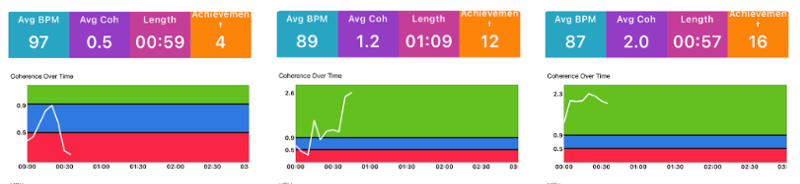
Brief case history:  When a child with Autism Level 3 (minimally speaking) first began care, we did a full brain-based neurological and chiropractic exam.  One test we used was heart rate variability (HRV) using HeartMath, to test his vagus nerve, which is the major control center for regulation (and if the vagus is not working well, we see dysregulation).  HeartMath testing revealed a nervous system seriously struggling to self-regulate. At the initial assessment, average coherence was just 0.5, with 50% of the session spent in low coherence and 0% in high coherence (see below picture with all personal data removed).  This pattern often reflects a nervous system that is stuck in a state of stress, overwhelm, and poor adaptability. After just one month of brain-based chiropractic care, the child's average coherence more than doubled to 1.2, with 60% of the session now spent in high coherence. By the second re-exam four months later, the transformation was even more impressive: average coherence reached 2.0, with 100% of the session occurring in high coherence and 0% in low coherence. At the same time, average heart rate decreased from 97 BPM to 87 BPM, suggesting a shift toward a calmer, more efficient state of autonomic regulation.  These are not isolated results.  We see this time and again with our kids with Autism, especially those that are dysregulated. 

Brain-based chiropractic care is designed to help improve communication between the brain and body by supporting healthy nervous system function. As interference and stress patterns are reduced, the brain is often better able to interpret and respond to the world appropriately rather than remaining in a constant state of defense. For this child, the objective HRV measurements demonstrated a clear progression from dysregulation toward regulation, reflected by an impressive increase in coherence over four months. While every child responds differently, improvements in nervous system regulation are often associated with better adaptability, attention, emotional resilience, sleep, social engagement, and overall quality of life. Stories like this remind us that when we focus on improving nervous system function, we are not simply chasing symptoms, we are helping children build a stronger foundation for growth, development, and connection. This child now has less meltdowns, when they do have a meltdown they calm faster, has better communication, and has started to play with other children rather than 100% by themselves…all signs of a better ‘tuned’ vagus nerve. 

    HRV scores:   April 2026                                    May 2026                                               September 2026

Reference:

https://www.heartmath.com/ 


4 Gentle Styles to Pediatric Chiropractic Care

Posted: September 15, 2026
By: Dr. Drew Rubin

When parents bring their child to a pediatric chiropractor, one of the most common questions they ask is, "How do you adjust a baby or child?" The answer may surprise them. Pediatric chiropractic care is very different from the types of adjustments often seen in adults. Chiropractors who care for infants and children use age-appropriate techniques that are gentle, specific, and tailored to the child's size, development, and unique needs. Four of the most common approaches include gentle manual adjusting, fingertip sustained contact adjusting, instrument adjusting, and tonal or non-force adjusting.

Gentle manual adjusting uses light, controlled pressure applied by the chiropractor's hands to specific areas of the spine or body. The force used with infants is often compared to the amount of pressure needed to check the ripeness of a tomato. Fingertip sustained contact adjusting involves placing a gentle contact with one or more fingertips and holding that position for a several seconds while the child's body responds and relaxes. Instrument adjusting utilizes specialized handheld instruments such as the Activator adjusting tool that deliver a very precise and low-force impulse to a targeted area. The fourth category, tonal or non-force adjusting, emphasizes working with the body's natural tension patterns, neurological reflexes, and self-regulating mechanisms. Chiropractors using tonal approaches may apply a very light touch, hold specific points on the body, or use gentle positioning to encourage the nervous system to organize and adapt more effectively.

While each of these four techniques differs in its application, they share a common goal: supporting healthy nervous system function and helping children achieve their best potential for growth, development, movement, and overall well-being. Pediatric chiropractors, especially those trained by the International Chiropractic Pediatric Association (ICPA), can become certified by completing a 200-hour program with rigorous tests after each 12-hour training.   ICPA certified pediatric chiropractors are trained to select the technique that best fits each child's age, comfort level, health goals, and individual needs.  I have been an ICPA certified chiropractor since 2006 and taken an additional 200 hours to become what is known as a board-certified diplomate in pediatrics, the highest postgraduate degree that can be obtained in pediatrics, which was awarded to me in 2008.  There are only approximately 100 diplomates in the entire US!  Make sure when taking your kids to a chiropractor that they are either certified in pediatrics or a diplomate in pediatrics!

References: 

https://icpa4kids.com/training/pediatric-certification/ 


What Do Newton's Laws Have to Do with Chiropractic Care?

Posted: September 2, 2026
By: Dr. Drew Rubin

Most of us learned Isaac Newton's Laws of Motion in school, but they also offer an interesting way to think about chiropractic care. Newton's First Law states that an object in motion tends to stay in motion, while an object at rest tends to stay at rest unless acted upon by an outside force. In a similar way, kids can become stuck in patterns. Whether it's poor posture, chronic stress, repetitive movement habits, or nervous system challenges, the body often continues doing what it has been doing. This can be especially noticeable in children who struggle with sensory processing, communication, or developmental issues. Chiropractic adjustments serve as a gentle, specific influence that can help restore proper movement and improve communication between the brain and body, giving the nervous system an opportunity to adapt and respond in new ways.

Newton's Second and Third Laws remind us that change requires the right amount of force and that every action produces a reaction. Effective chiropractic care is about using the appropriate force for that specific person.  A child with a sensitive nervous system, a pregnant mother in discomfort, or a newborn baby with colic all need very different types of adjustments. Just as a skilled trainer gradually increases exercise intensity to build strength safely, chiropractors carefully tailor adjustments to a person's needs and nervous system capacity. Over time, as healthier patterns develop and the body becomes more adaptable, positive changes are often easier to maintain, reflecting Newton's idea that a body in motion tends to stay in motion.

Don’t let inertia keep your brain and nerve system, or your child’s brain and nerve system, stuck in a pattern that they can’t get out of.  Time and again we see patients who have grown used to certain patterns of illness, pain or behaviors that can be altered if we alter what is going into the body on a regular basis, such as gentle chiropractic adjustments.

Archives